Our History
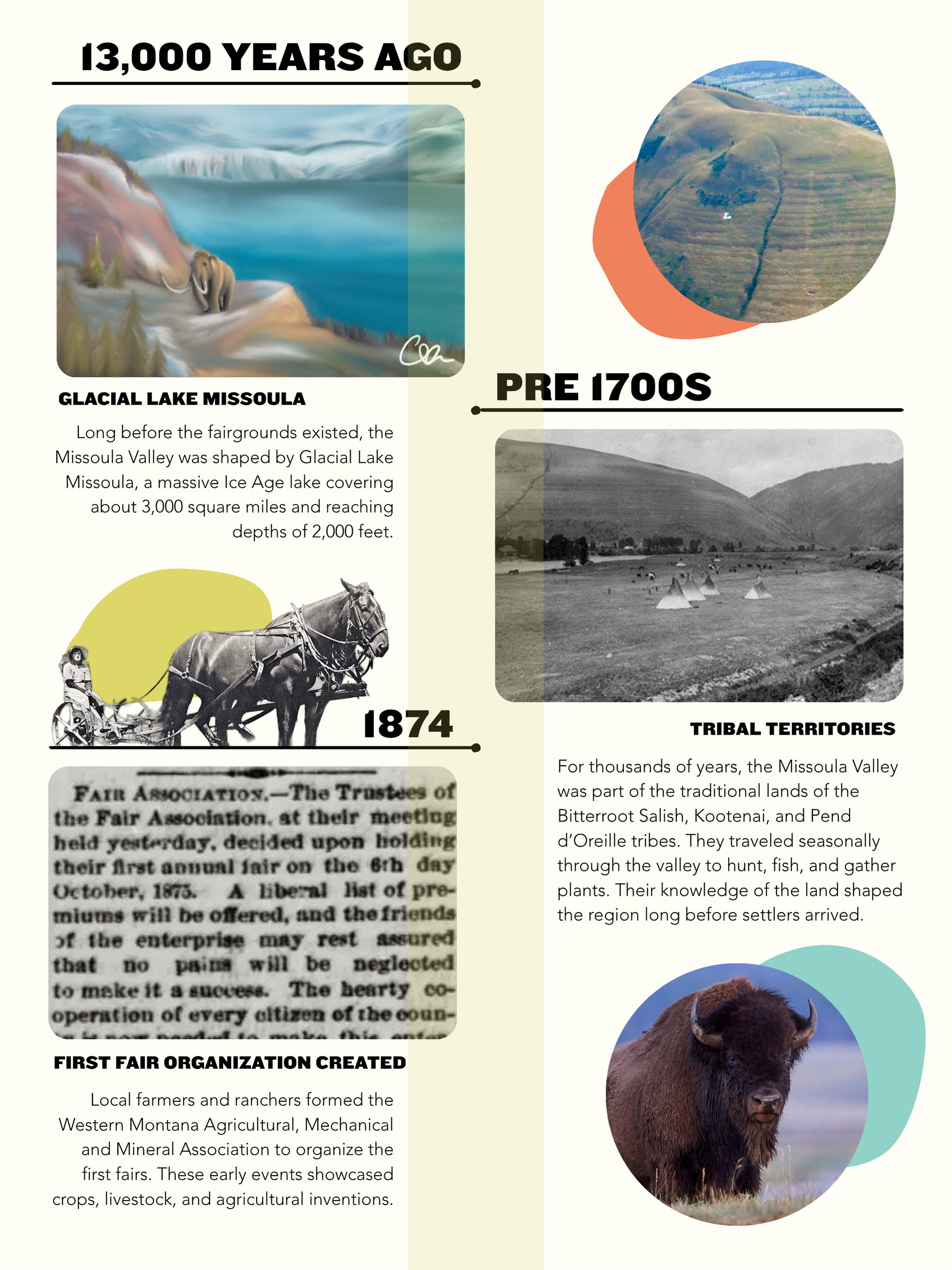
13,000 Years Ago
Glacial Lake Missoula
Long before the fairgrounds existed, the Missoula Valley was shaped by Glacial Lake Missoula, a massive Ice Age lake covering about 3,000 square miles and reaching depths of 2,000 feet.
Pre-1700s
Tribal Territories
For thousands of years, the Missoula Valley was part of the traditional lands of the Bitterroot Salish, Kootenai, and Pend d’Oreille tribes. They traveled seasonally through the valley to hunt, fish, and gather plants. Their knowledge of the land shaped the region long before settlers arrived.
1874
First Fair Organization Created
Local farmers and ranchers formed the Western Montana Agricultural, Mechanical and Mineral Association to organize the first fairs. These early events showcased crops, livestock, and agricultural inventions.
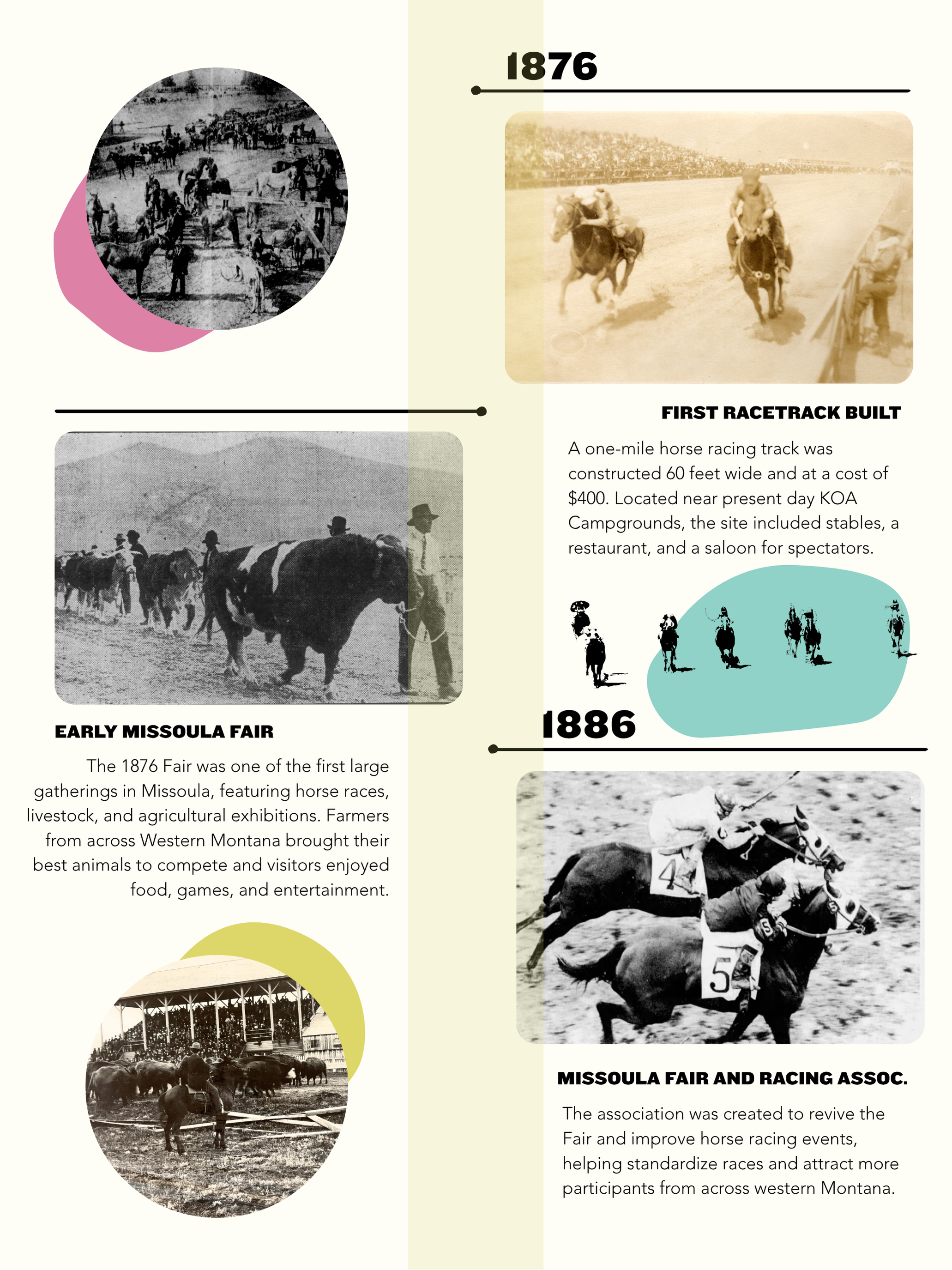
1876
Early Missoula Fair
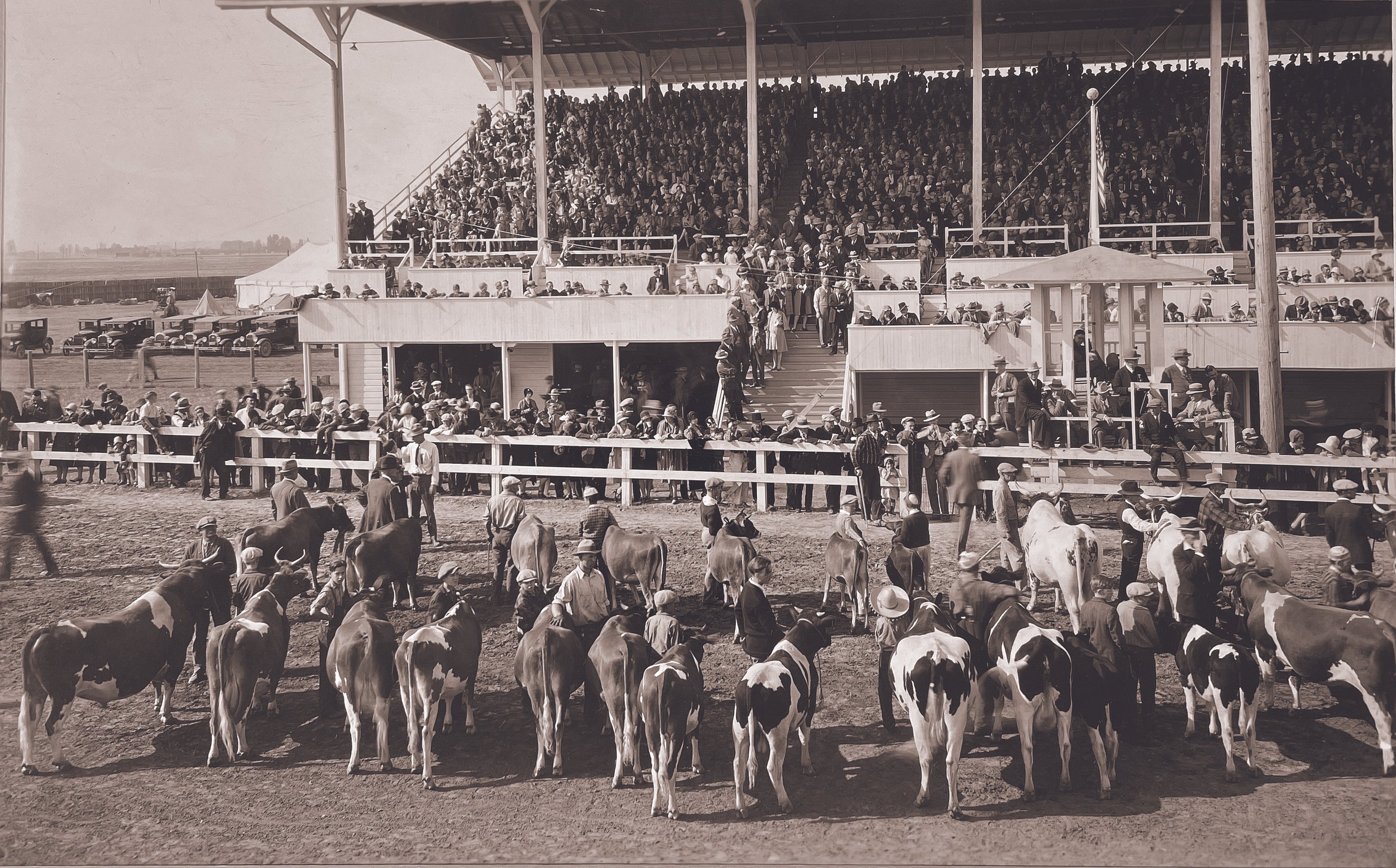
The 1876 Fair was one of the first large gatherings in Missoula, featuring horse races, livestock, and agricultural exhibitions. Farmers from across Western Montana brought their best animals to compete, and visitors enjoyed food, games, and entertainment.
1876
First Racetrack Built
A one-mile horse racing track was constructed 60 feet wide at a cost of $400. Located near present day KOA Campgrounds, the site included stables, a restaurant, and a saloon for spectators.
1886
Missoula Fair and Racing Association
The association was created to revive the Fair and improve horse racing events, helping standardize races and attract more participants from across western Montana.
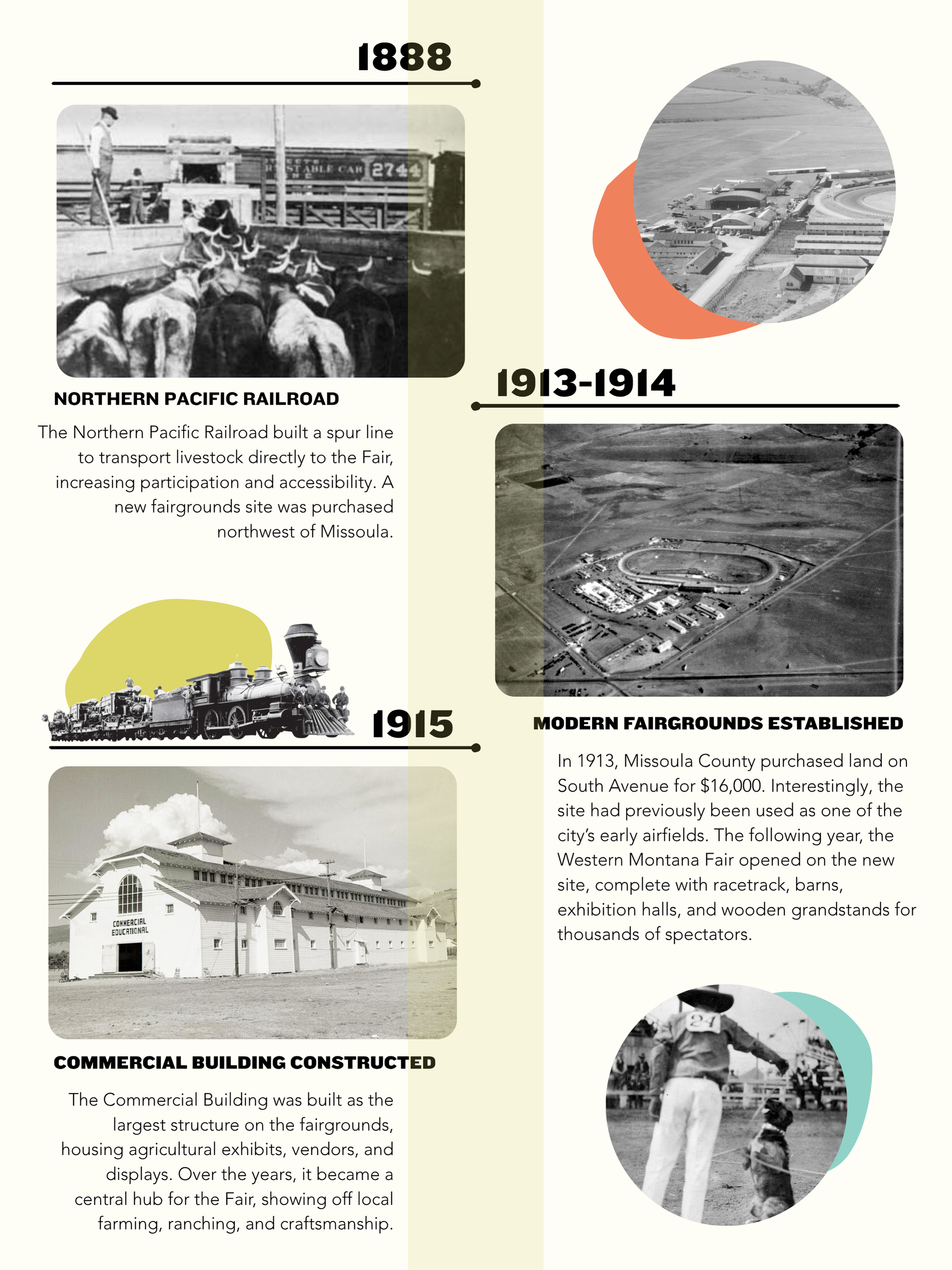
1888
Northern Pacific Railroad
The Northern Pacific Railroad built a spur line to transport livestock directly to the Fair, increasing participation and accessibility. A new fairgrounds site was purchased northwest of Missoula.
1913–1914
Modern Fairgrounds Established
In 1913, Missoula County purchased land on South Avenue for $16,000. Interestingly, the site had previously been used as one of the city’s early airfields. The following year, the Western Montana Fair opened on the new site, complete with racetrack, barns, exhibition halls, and wooden grandstands for thousands of spectators.
1915
Commercial Building Constructed
The Commercial Building was built as the largest structure on the fairgrounds, housing agricultural exhibits, vendors, and displays. Over the years, it became a central hub for the Fair, showcasing local farming, ranching, and craftsmanship.
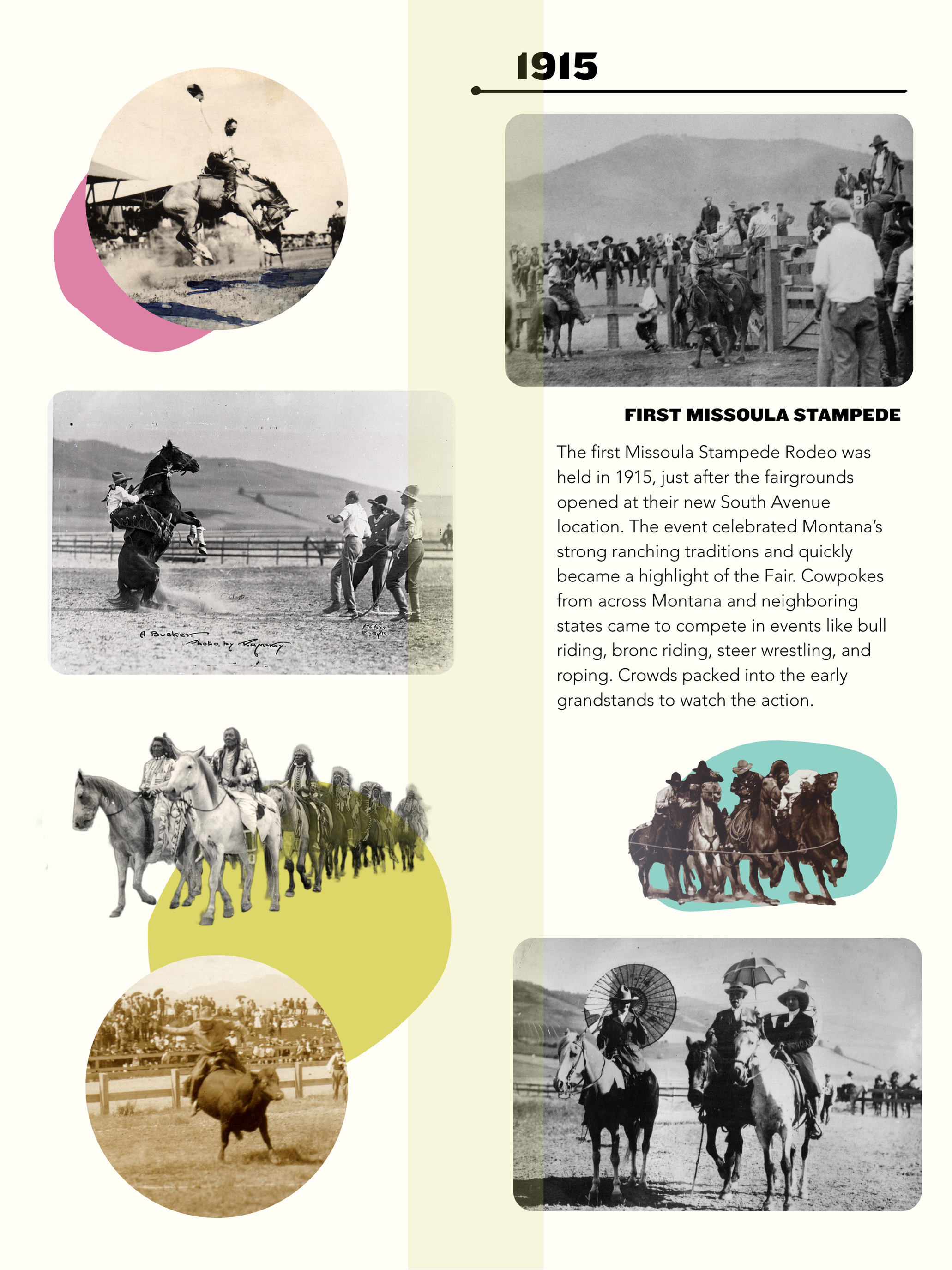
1915
First Missoula Stampede
The first Missoula Stampede Rodeo was held in 1915, just after the fairgrounds opened at their new South Avenue location. The event celebrated Montana’s strong ranching traditions and quickly became a highlight of the Fair. Cowpokes from across Montana and neighboring states came to compete in events like bull riding, bronc riding, steer wrestling, and roping. Crowds packed into the early grandstands to watch the action.
1915
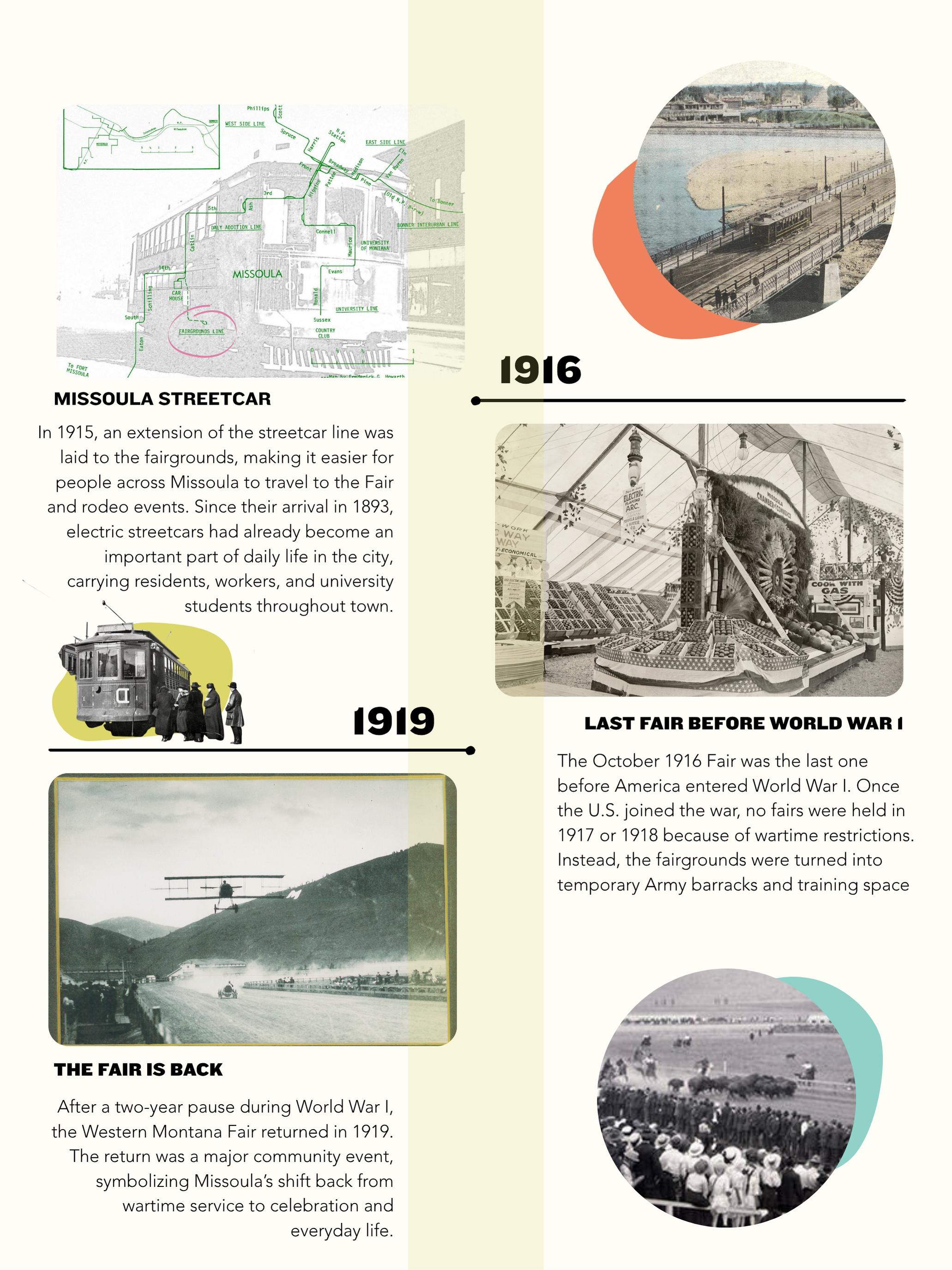
Missoula Streetcar
In 1915, an extension of the streetcar line was laid to the fairgrounds, making it easier for people across Missoula to travel to the Fair and rodeo events. Since their arrival in 1893, electric streetcars had already become an important part of daily life in the city, carrying residents, workers, and university students throughout town.
1916
Last Fair Before World War I
The October 1916 Fair was the last one before America entered World War I. Once the U.S. joined the war, no fairs were held in 1917 or 1918 because of wartime restrictions. Instead, the fairgrounds were turned into temporary Army barracks and training space.
1919
The Fair is Back
After a two-year pause during World War I, the Western Montana Fair returned in 1919. The return was a major community event, symbolizing Missoula’s shift back from wartime service to celebration and everyday life.
1920s
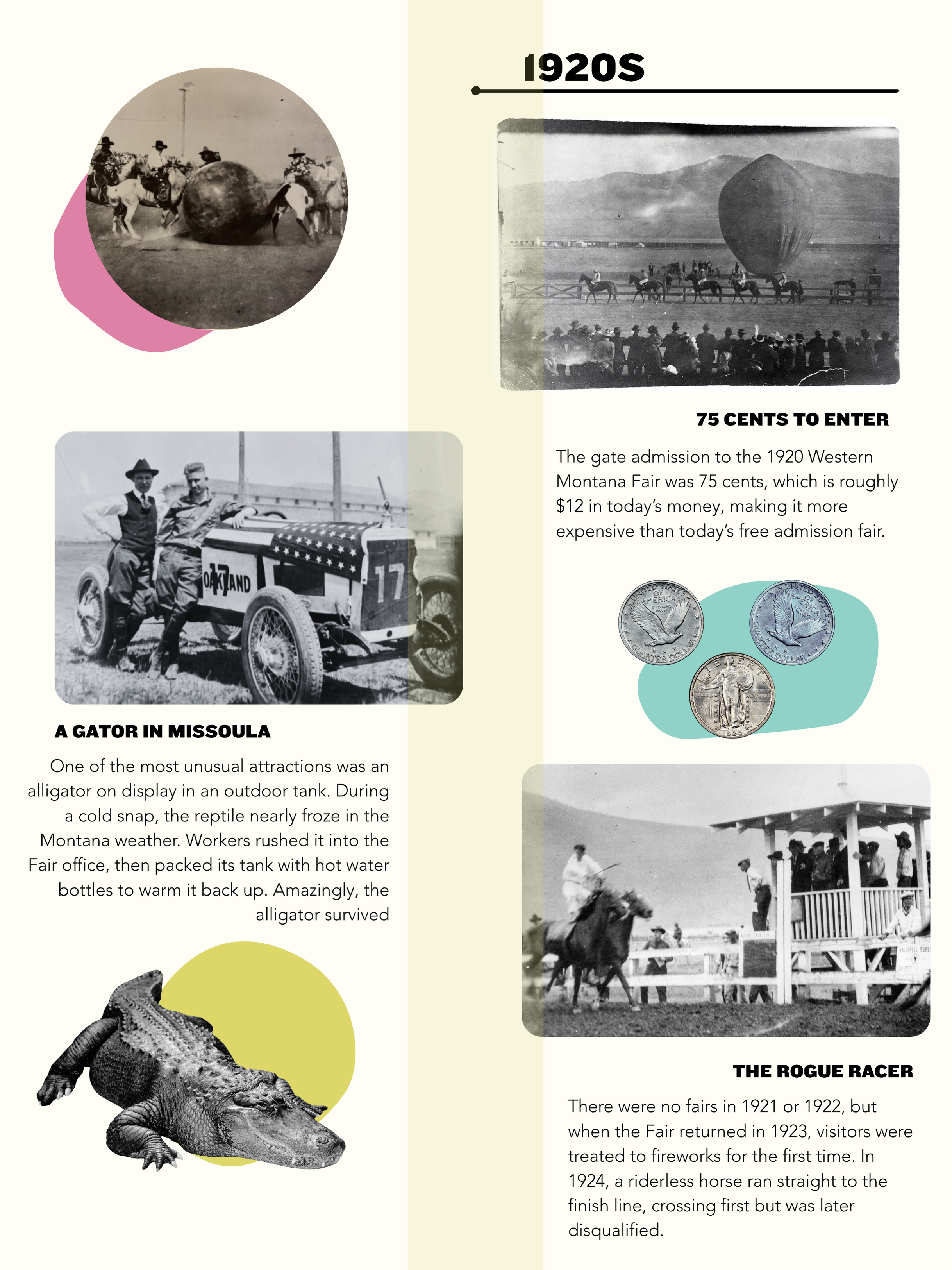
75 Cents to Enter
The gate admission to the 1920 Western Montana Fair was 75 cents, which is roughly $12 in today’s money, making it more expensive than today’s free admission fair.
A Gator in Missoula
One of the most unusual attractions was an alligator on display in an outdoor tank. During a cold snap, the reptile nearly froze in the Montana weather. Workers rushed it into the Fair office, then packed its tank with hot water bottles to warm it back up. Amazingly, the alligator survived.
The Rogue Racer
There were no fairs in 1921 or 1922, but when the Fair returned in 1923, visitors were treated to fireworks for the first time. In 1924, a riderless horse ran straight to the finish line, crossing first but was later disqualified.
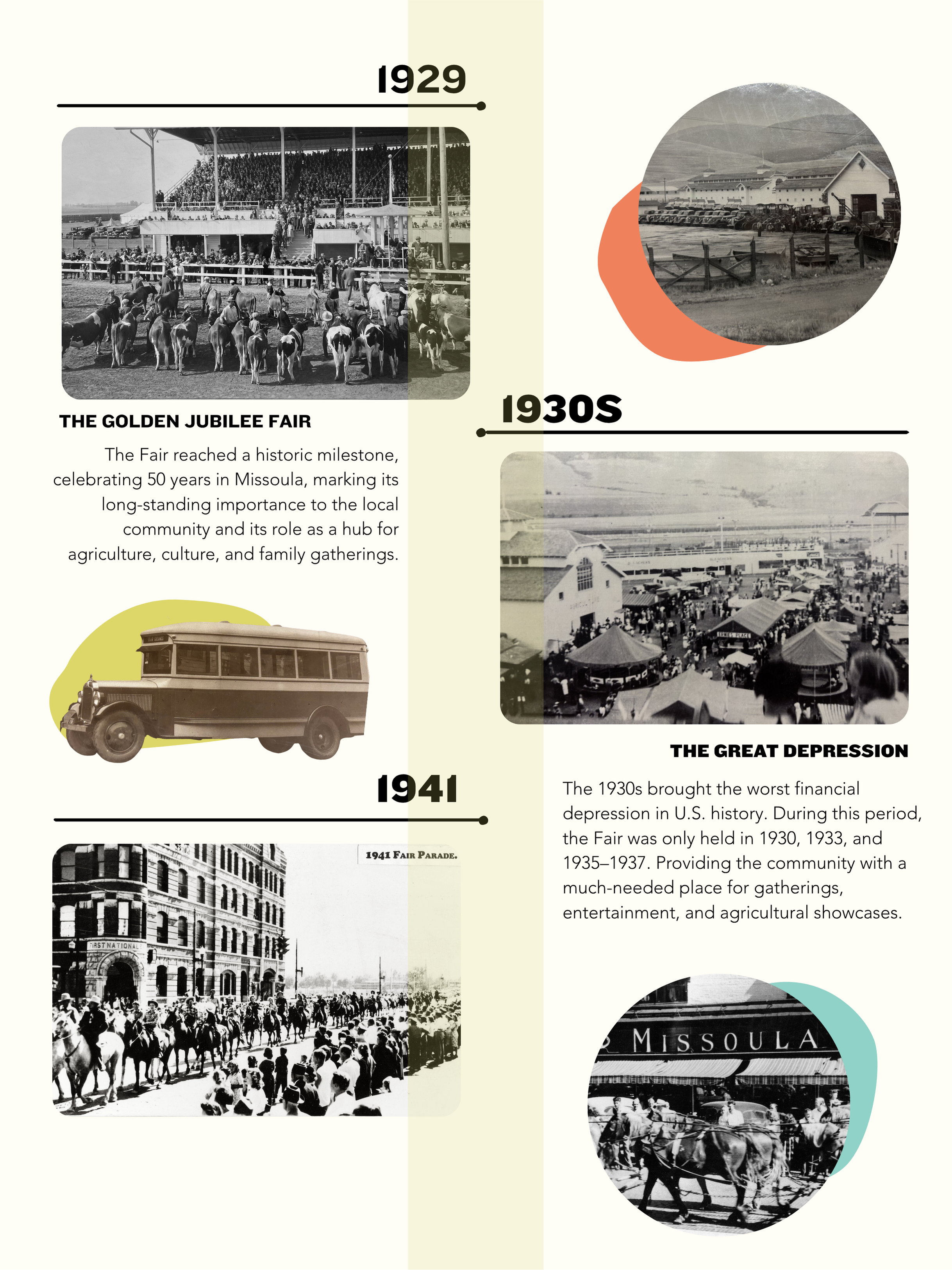
1929
The Golden Jubilee Fair
The Fair reached a historic milestone, celebrating 50 years in Missoula, marking its long-standing importance to the local community and its role as a hub for agriculture, culture, and family gatherings.
1930s
The Great Depression
The 1930s brought the worst financial depression in U.S. history. During this period, the Fair was only held in 1930, 1933, and 1935–1937. Even so, it provided the community with a much-needed place for gatherings, entertainment, and agricultural showcases.
1940s
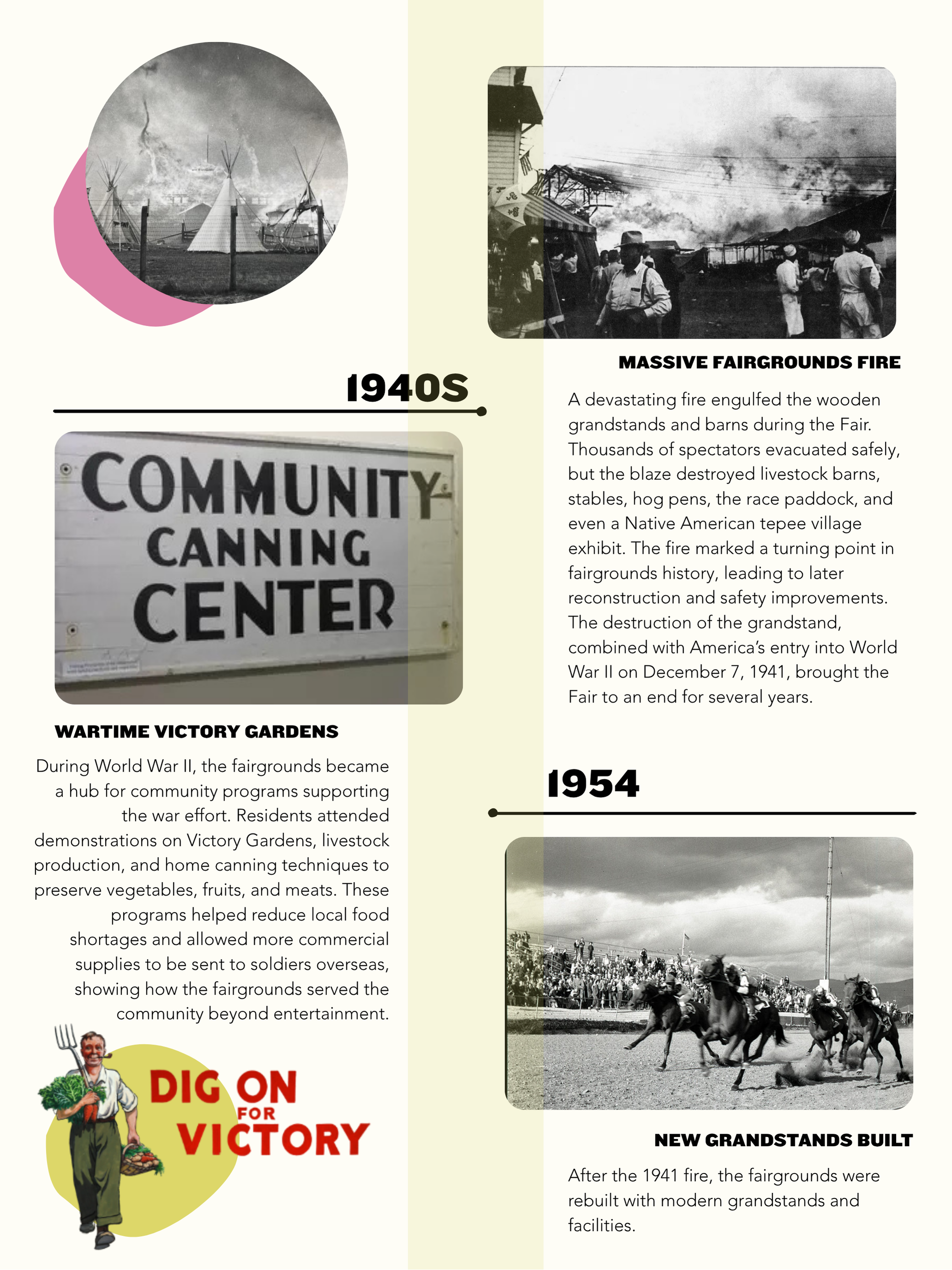
Massive Fairgrounds Fire
A devastating fire engulfed the wooden grandstands and barns during the Fair. Thousands of spectators evacuated safely, but the blaze destroyed livestock barns, stables, hog pens, the race paddock, and even a Native American tepee village exhibit. The fire marked a turning point in fairgrounds history, leading to later reconstruction and safety improvements. The destruction of the grandstand, combined with America’s entry into World War II on December 7, 1941, brought the Fair to an end for several years.
Wartime Victory Gardens
During World War II, the fairgrounds became a hub for community programs supporting the war effort. Residents attended demonstrations on Victory Gardens, livestock production, and home canning techniques to preserve vegetables, fruits, and meats. These programs helped reduce local food shortages and allowed more commercial supplies to be sent to soldiers overseas, showing how the fairgrounds served the community beyond entertainment.
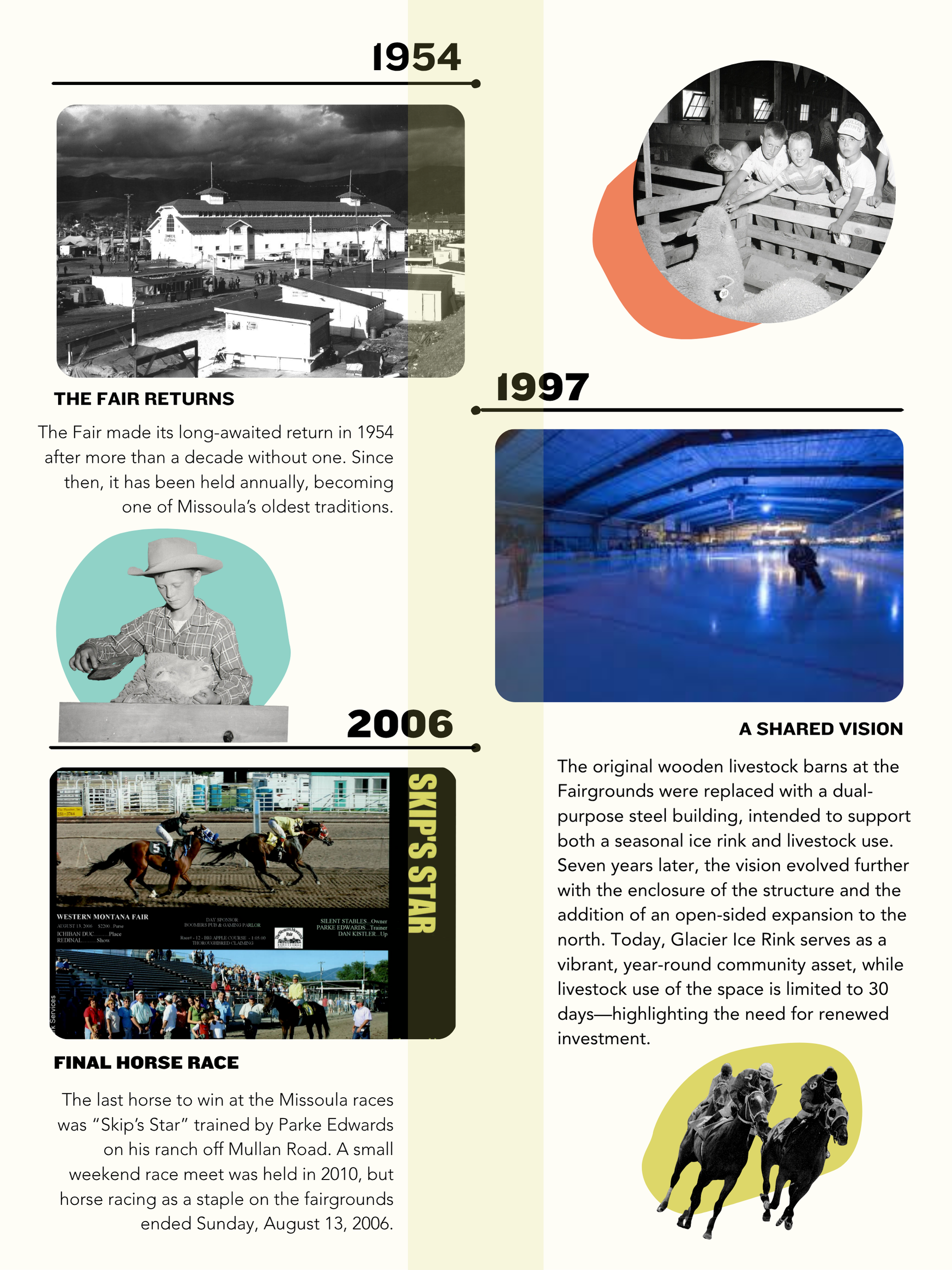
1954
The Fair Returns
The Fair made its long-awaited return in 1954 after more than a decade without one. Since then, it has been held annually, becoming one of Missoula’s oldest traditions.
New Grandstands Built
After the 1941 fire, the fairgrounds were rebuilt with modern grandstands and facilities.
1997
A Shared Vision
The original wooden livestock barns at the fairgrounds were replaced with a dual-purpose steel building, intended to support both a seasonal ice rink and livestock use. Seven years later, the vision evolved further with the enclosure of the structure and the addition of an open-sided expansion to the north. Today, Glacier Ice Rink serves as a vibrant, year-round community asset, while livestock use of the space is limited to 30 days, highlighting the need for renewed investment.
2006
Final Horse Race
The last horse to win at the Missoula races was “Skip’s Star,” trained by Parke Edwards on his ranch off Mullan Road. A small weekend race meet was held in 2010, but horse racing as a staple on the fairgrounds ended Sunday, August 13, 2006.
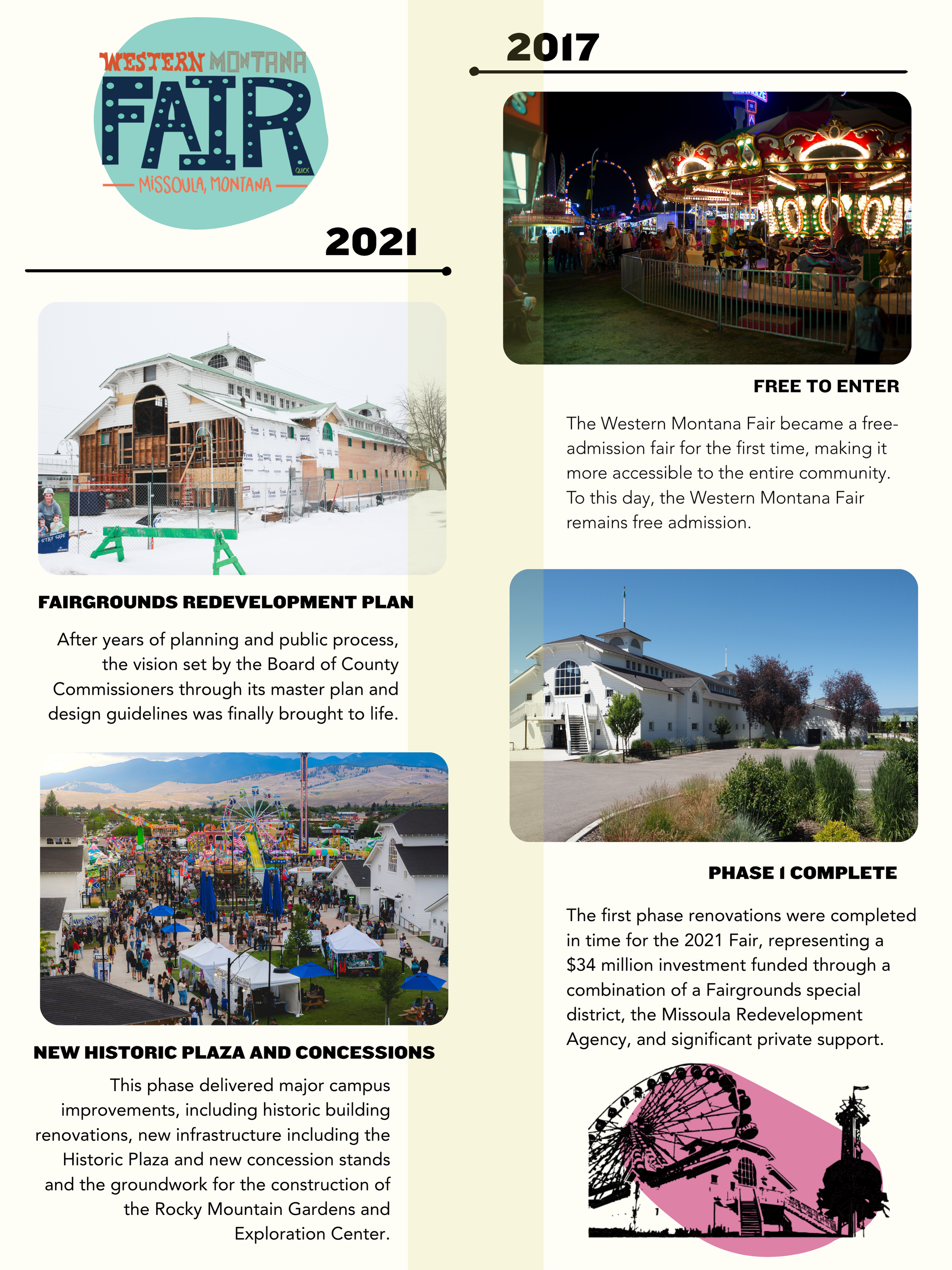
2017
Free to Enter
The Western Montana Fair became a free-admission fair for the first time, making it more accessible to the entire community. To this day, the Fair remains free admission.
2021
Fairgrounds Redevelopment Plan
After years of planning and public process, the vision set by the Board of County Commissioners through its master plan and design guidelines was finally brought to life.
Phase I Complete
The first phase renovations were completed in time for the 2021 Fair, representing a $34 million investment funded through a combination of a Fairgrounds special district, the Missoula Redevelopment Agency, and significant private support.
New Historic Plaza and Concessions
This phase delivered major campus improvements, including historic building renovations, new infrastructure including the Historic Plaza and new concession stands, and the groundwork for the construction of the Rocky Mountain Gardens and Exploration Center.
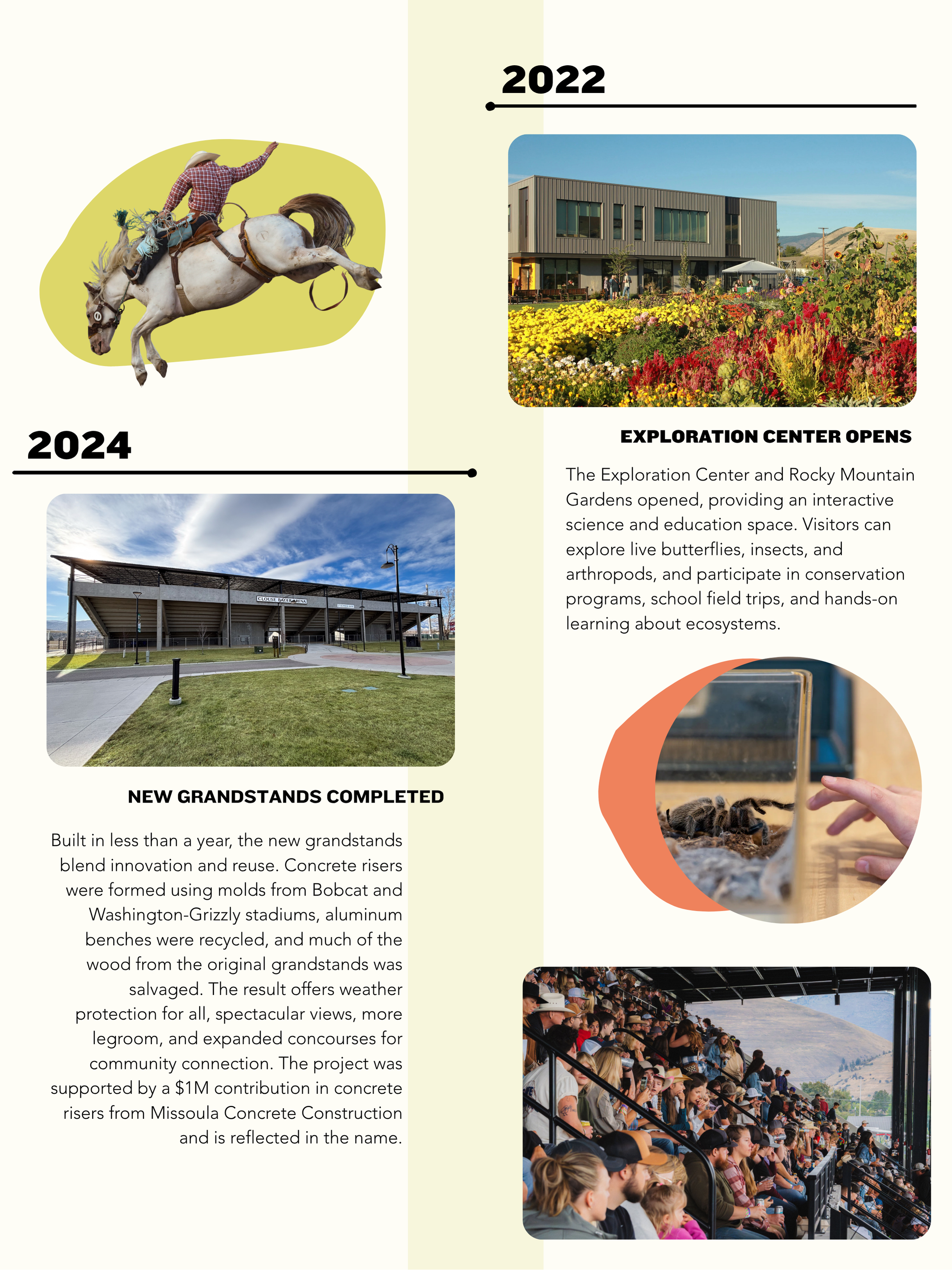
2022
Exploration Center Opens
The Exploration Center and Rocky Mountain Gardens opened, providing an interactive science and education space. Visitors can explore live butterflies, insects, and arthropods, and participate in conservation programs, school field trips, and hands-on learning about ecosystems.
2024
New Grandstands Completed
Built in less than a year, the new grandstands blend innovation and reuse. Concrete risers were formed using molds from Bobcat and Washington-Grizzly stadiums, aluminum benches were recycled, and much of the wood from the original grandstands was salvaged. The result offers weather protection for all, spectacular views, more legroom, and expanded concourses for community connection. The project was supported by a $1M contribution in concrete risers from Missoula Concrete Construction and is reflected in the name.